Westie: The Elegant Sans Serif That Adds Instant Polish to Any Project
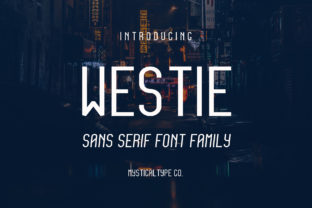
If you’ve ever spent 20 minutes scrolling through font libraries just to find something that feels right—clean but not cold, modern but not trendy, professional but not stiff—you’re not overthinking it. You’re looking for Westie. It’s an elegant sans serif font with a modern and smart feel—designed not to shout, but to settle in confidently beside your words, your brand, or your idea.
What Westie Actually Is (and Why That Matters)
Westie isn’t a revival, a variable experiment, or a hyper-stylized display face. It’s a carefully crafted, highly legible sans serif built for real-world use: from a blog post read on a phone at 9 p.m. to a pitch deck presented to investors, to a hand-lettered workshop flyer taped to a café bulletin board. Its letterforms have subtle warmth—gentle curves, balanced proportions, and open counters—that keep text inviting without sacrificing clarity. There’s no forced quirkiness or artificial “personality.” Instead, Westie earns trust through consistency and restraint.
Where Westie Fits Into Real Life—Not Just Design Theory
You don’t need a design degree—or even a formal project—to benefit from Westie. Here’s where it quietly elevates everyday work:
- Bloggers and content creators use Westie for body text and headings because it holds attention without demanding it. Unlike some ultra-thin or geometric fonts, Westie stays readable at small sizes on screens—and its even color (how dark or light the text appears overall) means paragraphs flow smoothly, not in jarring visual chunks.
- Small business owners choose Westie for simple, effective branding: a clean logo lockup, product labels, Instagram story text overlays, or email newsletters. One local bakery switched from a playful handwritten font to Westie for their menu board—and reported customers commenting on how “calm” and “thoughtful” the space felt. That’s not coincidence—it’s typography shaping perception.
- Educators and course creators apply Westie to slide decks, handouts, and LMS pages. Its generous x-height and clear letter distinctions (like between lowercase l, 1, and i) reduce cognitive load—especially helpful for students reading on laptops or shared tablets.
- Freelancers and agencies include Westie in client deliverables when they want to signal competence without pretension. A web designer used it across a nonprofit’s new website, internal reports, and donor thank-you cards—and the client said, “It finally feels like *us*, not like we hired a designer to make us look fancy.”
When Westie Works Best (and When It Might Not)
Westie shines in situations where clarity, calm authority, and quiet confidence matter more than flash or novelty. Think: annual reports, editorial layouts, SaaS dashboards, podcast show notes, resume headers, or minimalist packaging. It pairs naturally with soft photography, muted color palettes, and ample white space—but also holds up alongside bolder visuals when you need contrast without chaos.
That said, Westie isn’t ideal for every context. If your project relies heavily on irony, streetwear energy, or high-contrast retro vibes, it may feel too composed. It’s not meant for neon-lit concert posters or meme-heavy social feeds where personality needs to burst off the screen. And while it supports multiple weights (Light to Bold), it doesn’t include stylistic alternates or swashes—so if your workflow depends on decorative flourishes or layered typographic effects, you’ll want to pair it thoughtfully rather than rely on it alone.
Practical Things to Consider Before Using Westie
Before downloading or licensing Westie, ask yourself a few grounded questions:
- What’s the primary medium? Westie performs exceptionally well on screens (web, apps, presentations) and in print (brochures, business cards, signage). If you’re working mainly in video editing software or legacy publishing tools with limited font support, double-check compatibility first.
- Who’s actually reading this? If your audience includes older adults or people with visual impairments, test Westie at 16–18px body size with sufficient line height and contrast. Its legibility is strong—but never assume. Try it in your actual layout, not just a font preview.
- How much control do you need over spacing? Westie includes well-tuned kerning and OpenType features like ligatures and old-style figures. If you’re using it in a CMS or platform that doesn’t expose those features (like basic WordPress themes or Canva free tier), you’ll still get excellent results—but won’t unlock its full typographic refinement.
- Is licensing aligned with your use case? Westie offers both desktop and web licenses. A freelance writer using it for personal blog posts needs a different license than a Shopify store embedding it across product pages. Check the terms—not just for legality, but to avoid unexpected limitations down the line.
How Westie Changes the Feel of Your Work—Without Changing Your Message
Typography doesn’t rewrite your words—but it changes how they land. A newsletter written in Westie reads differently than the same content in a default system font: it feels more considered, more intentional, more *yours*. That shift isn’t about aesthetics alone. It’s about signaling care—for your readers’ time, for your brand’s coherence, for the quiet professionalism that builds credibility over time.
One educator told us she started using Westie for her weekly student feedback emails. “It didn’t change what I wrote,” she said. “But students replied faster, asked clearer follow-up questions, and several mentioned how ‘easy to read’ the feedback felt—even though it was the same length and structure as before.” That’s Westie doing its job: removing friction so meaning moves forward.
Another example: a freelance copywriter switched to Westie for client-facing documents after noticing prospects skimmed her proposals too quickly. With Westie’s even rhythm and open spacing, the same content suddenly held attention longer—leading to fewer revision rounds and one client saying, “This feels like the version you *really* wanted us to see.”
Getting Started—Simply and Sustainably
You don’t need to overhaul your entire toolkit to try Westie. Start small: replace the heading font in your next Google Doc presentation. Swap it in for the subhead on your portfolio homepage. Use it for the “About” section on your small business website. Notice how it affects pacing, tone, and perceived effort—not just looks.
And remember: great typography isn’t about owning every font. It’s about choosing the right one for the moment—and Westie fits a surprisingly wide range of moments. Whether you're launching a side hustle, designing a classroom handout, writing a memoir, or building a community newsletter, it brings a sleek vibe without asking for attention. It simply makes your work feel more like *you*: capable, clear, and quietly confident.