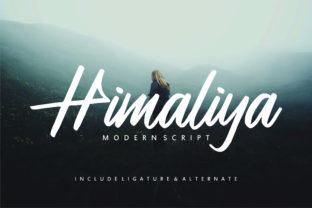
Himaliya: A Modern Handwritten Font
Himaliya is a contemporary handwritten typeface that feels both personal and polished—like your favorite pen sketch refined with digital precision. It’s not just “hand-drawn”; it’s thoughtfully engineered to balance warmth and clarity, rhythm and restraint. Whether you’re designing a wedding invite, branding a small business, or adding character to a blog post, Himaliya brings quiet confidence without shouting for attention.
What Makes Himaliya Stand Out?
At first glance, Himaliya looks effortlessly fluid—smooth letterforms, subtle variation in stroke weight, and gentle slant that suggests movement without sacrificing readability. But look closer: its “smart twist” lies in intentional consistency. Unlike many handwritten fonts that sacrifice legibility for flair, Himaliya maintains clear letter distinctions (like the lowercase a vs. o, or l vs. i) even at smaller sizes. That makes it unusually versatile—not just decorative, but functional.
It includes standard Latin characters, numerals, punctuation, and basic diacritics—enough for English and many European languages. There’s no extended multilingual support or OpenType features like stylistic alternates or ligatures, so it’s best suited for straightforward, expressive use—not complex typographic systems.
Who Benefits Most from Himaliya?
If you value authenticity but don’t have time to master calligraphy—or if you want handwriting charm without the unevenness—Himaliya fits naturally into your workflow. Beginners appreciate how little adjustment it needs: drop it into Canva, Figma, or Google Docs, and it works right away. Professionals love that it pairs well with clean sans-serifs (think Inter, Montserrat, or Lato) for contrast that feels intentional, not accidental.
Small business owners use Himaliya for packaging labels, café chalkboard menus, or Instagram story text overlays—places where friendliness and professionalism must coexist. Educators apply it in handouts or classroom posters to soften academic tone without losing authority. Bloggers and marketers choose it for email headers or quote graphics because it adds humanity to digital spaces often dominated by sterile fonts.
Real-Life Uses You Can Try Today
- Branding a local service: A yoga studio uses Himaliya for its logo tagline (“Breathe. Move. Belong.”) alongside a minimalist sans-serif logotype—creating instant warmth and approachability.
- Digital content: A freelance writer adds Himaliya to pull quotes in Substack newsletters. The font’s gentle curves make key ideas feel more personal and memorable.
- Educational materials: A high school science teacher designs a lab worksheet header with Himaliya, helping students subconsciously associate the topic with curiosity and care—not cold facts.
- Printed goods: An indie stationery brand prints Himaliya on kraft paper thank-you cards. Its texture-friendly contrast ensures legibility without looking overly crisp or artificial.
Where Himaliya Shines—and Where It Doesn’t
Himaliya excels in short-form, high-impact settings: headlines, logos, social media visuals, greeting cards, product tags, and presentation titles. Its strength is emotional resonance—not dense body copy. Avoid using it for paragraphs, long captions, or accessibility-critical text (like legal disclaimers or instructions), where consistent spacing and strong character distinction matter most.
It also works best with ample white space. Crowding Himaliya next to heavy imagery or busy backgrounds can mute its elegance. Try pairing it with soft neutrals, muted pastels, or natural textures—linen, recycled paper, matte finishes—to let its subtlety breathe.
Things to Keep in Mind Before Using Himaliya
First, licensing matters. Himaliya is typically available under a commercial license—meaning personal use may be free, but selling products featuring the font (like merch or templates) usually requires permission or a paid license. Always check the source: reputable foundries or marketplaces will clarify usage rights upfront.
Second, test it across devices. While Himaliya renders cleanly on desktop, some mobile browsers or older email clients may substitute it with a default font if embedded improperly. For web use, consider converting short headings to SVG or using modern @font-face loading techniques—especially if consistency is non-negotiable.
Third, think about audience context. A tech startup targeting enterprise clients might find Himaliya too soft for core messaging—but perfect for their internal culture newsletter or community welcome series. Match the font’s tone to the message’s intent, not just the medium.
A Friendly Nudge for First-Time Users
If you’re new to typography, start simple: pick one place where a little personality would help—like the “About Me” section of your portfolio site or the title slide of your next workshop deck. Type a short phrase in Himaliya, then step back. Does it feel like *you*? Does it guide the eye without confusing it? If yes, you’ve found your fit.
You don’t need design experience to benefit from Himaliya. What helps most is intention: using it where warmth matters, where connection matters, where a human touch lifts something ordinary into something felt. It won’t solve every design challenge—but when used with care, it quietly elevates the everyday.
Final Thought: Charm With Purpose
Himaliya isn’t about nostalgia or trend-chasing. It’s about choosing clarity with character, simplicity with soul. In a world of algorithm-driven interfaces and uniform templates, fonts like Himaliya remind us that thoughtful design starts with empathy—for the reader, the viewer, the person on the other side of the screen or page. That’s why it resonates across disciplines, ages, and goals—not because it’s flashy, but because it’s genuinely useful, quietly confident, and refreshingly human.