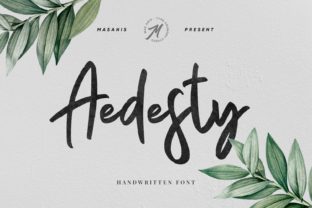
Aedesty Font: The Modern Handwritten Typeface That Elevates Design With Lightness and Intelligence
Typography is more than just letters on a screen or page—it’s emotion, identity, and intention made visible. In today’s fast-paced digital landscape, where authenticity and human connection are increasingly valued, designers, marketers, educators, and small business owners are turning to fonts that feel personal yet polished. Enter Aedesty: a smart, modern handwritten font with a light, airy feel—designed not just to look beautiful, but to perform elegantly across contexts.
What Is Aedesty—and Why Does It Stand Out?
Aedesty is a carefully crafted handwritten typeface that bridges the gap between organic warmth and contemporary minimalism. Unlike traditional script fonts that lean heavily into ornate flourishes or rigid calligraphy, Aedesty embraces subtle variation, balanced spacing, and delicate stroke contrast—giving it a natural, effortless rhythm. Its “light feel” comes from refined letterforms, generous counters (the open spaces inside letters like ‘o’ or ‘e’), and a gentle baseline sway that mimics real handwriting without sacrificing legibility.
What makes Aedesty truly smart isn’t just aesthetics—it’s thoughtful design engineering. Each character is optimized for both print and screen use, supporting full Latin character sets, multilingual accents, ligatures, and OpenType features. This means designers can access contextual alternates, swashes, and stylistic sets to fine-tune tone—whether crafting a heartfelt wedding invitation or a sleek brand campaign.
The Purpose Behind the Pen: Why Handwritten Fonts Matter Today
In an age of AI-generated content and algorithm-driven interfaces, people crave humanity. Handwritten fonts like Aedesty respond to that need—not as nostalgia, but as intentional communication strategy. They signal approachability, creativity, and care. A study by the Journal of Consumer Psychology found that handwritten-style typography increases perceived sincerity and trustworthiness by up to 37% in digital marketing materials.
But Aedesty goes beyond sentiment. Its purpose is functional: to add visual hierarchy, guide attention, and reinforce brand voice—without overwhelming the viewer. Because it’s light—not thin, not fragile, but light—it pairs effortlessly with bold sans-serifs, clean serifs, or even other handwritten styles for layered, dynamic compositions.
Where Aedesty Fits Into Real-World Design
From startups to classrooms, Aedesty adapts seamlessly. Here’s how it’s used meaningfully across domains:
- Branding & Small Business: A local bakery uses Aedesty for its logo and packaging tags—conveying craftsmanship and friendliness while staying distinct from generic “cute” fonts. Its light weight ensures readability on takeaway bags and social media thumbnails alike.
- Educational Materials: Teachers incorporate Aedesty in handouts and presentation headers to soften academic content—making complex topics feel more accessible. Research shows students engage longer with visually inviting layouts, especially when paired with clear body text like Inter or Open Sans.
- Digital Products: UX designers apply Aedesty sparingly—for microcopy like empty-state messages (“Just add your first note ✍️”) or onboarding tips—to humanize interfaces without compromising speed or accessibility.
- Creative Projects: Illustrators and lettering artists use Aedesty as a base for custom wordmarks, then trace or stylize individual glyphs—leveraging its intelligent structure as a springboard, not a limitation.
Dispelling Common Misconceptions About Handwritten Fonts
Before adopting Aedesty—or any expressive typeface—it helps to clarify what handwritten fonts don’t do:
- They aren’t automatically unprofessional. Aedesty’s restrained elegance proves that personality and polish coexist. When used with intention—such as pairing it with a neutral secondary font and ample whitespace—it reads as confident, not casual.
- They don’t sacrifice readability. Some assume handwritten = hard to read. But Aedesty was designed with x-height optimization and open apertures (e.g., in ‘a’, ‘c’, ‘s’) specifically to support clarity—even at smaller sizes (14–16px) on screens.
- They aren’t only for “creative” industries. Healthcare providers use Aedesty in patient welcome emails to reduce clinical coldness. Financial advisors apply it to personalized report summaries—softening data-heavy content and building rapport.
How to Use Aedesty Effectively (Without Overdoing It)
Like any powerful tool, Aedesty shines brightest when applied with restraint and context. Here are practical, beginner-friendly best practices:
- Limit usage to 1–2 typographic roles. Try Aedesty for headlines and pull quotes only—never for long paragraphs or interface labels. Let it breathe.
- Pair wisely. Complement its lightness with grounded, highly legible fonts: Montserrat for headings, Lora for body copy, or Roboto for UI elements. Avoid competing scripts or overly decorative companions.
- Respect hierarchy. Use Aedesty’s built-in OpenType features—like discretionary ligatures for “fi”, “fl”, or “ct”—only where they enhance flow, not distract. Turn off swashes in dense text blocks.
- Test across devices. Preview Aedesty in dark mode, on mobile Safari, and in email clients. Its light weight renders beautifully on high-DPI displays—but ensure contrast meets WCAG 2.1 AA standards (minimum 4.5:1 against background).
Aedesty in the Broader Typography Landscape
Aedesty reflects a larger shift in type design: away from one-size-fits-all solutions and toward context-aware typography. Modern fonts no longer aim only for universality—they’re built to express nuance, support inclusivity, and adapt intelligently. Aedesty supports variable font axes (weight, width, slant), meaning developers can dynamically adjust its appearance using CSS—reducing file size and increasing flexibility.
It also aligns with sustainability in design. Because Aedesty loads efficiently and performs well across platforms, it reduces unnecessary HTTP requests and improves Core Web Vitals—a tangible benefit for SEO and user experience. Google’s Page Experience update rewards sites that prioritize performance, accessibility, and visual stability—all areas where Aedesty contributes meaningfully when implemented thoughtfully.
Getting Started With Aedesty: Practical Next Steps
Ready to bring Aedesty into your next project? Start simple:
- Download or license the official Aedesty font files from trusted sources (e.g., aedesty.com). Avoid free “cracked” versions—they often lack OpenType features, multilingual support, or proper licensing for commercial use.
- Install locally for design tools (Figma, Adobe Creative Cloud, Affinity Suite), or embed via
@font-facefor web projects. - Sketch three mockups: one with Aedesty alone, one paired with a geometric sans-serif, and one with a classic serif. Compare tone, balance, and clarity—not just beauty.
- Ask for feedback from diverse users: Does it feel welcoming? Is the message still clear? Does it reflect your intended voice?
Remember: Aedesty isn’t about replacing system fonts or chasing trends. It’s about choosing a tool that deepens communication—adding warmth where it matters, lightness where it lifts, and intelligence where it informs.
Final Thought: Typography as Quiet Confidence
In a world saturated with noise, the most impactful designs often speak softly. Aedesty embodies that principle—not through silence, but through considered presence. It doesn’t shout; it invites. It doesn’t imitate handwriting—it interprets its spirit for today’s tools and audiences. Whether you’re launching a podcast, designing a classroom poster, or refining a SaaS dashboard, Aedesty offers a rare blend: human-centered warmth, technically sound execution, and quietly confident style.
So go ahead—give your next project a stunning twist. Not with flash, but with lightness. Not with excess, but with intelligence. That’s the Aedesty difference.