Audrey Love: The Handwritten Font That Adds Warmth, Confidence, and Personality to Real Projects
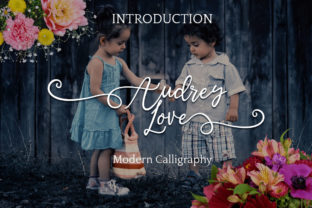
Imagine designing a wedding invitation that feels like it was written just for the couple—not mass-produced, but intimate and intentional. Or crafting a social media post for your small bakery where the “Freshly Baked Daily” sign doesn’t look like generic clip art, but like something you’d see chalked on a café window with care and charm. That’s where Audrey Love steps in—not as another decorative font, but as a confident, beautifully imperfect handwritten typeface with bold presence and genuine warmth.
Audrey Love isn’t delicate script or overly ornate calligraphy. It’s a stunning handwritten font with weight, rhythm, and personality—designed to hold its own at larger sizes while still feeling personal and human. Its bold feel comes from generous stroke contrast, natural swashes, and subtle irregularities that mimic real pen-on-paper movement. That means it reads clearly on screens and prints crisply on packaging, signage, or stationery—without losing its soul.
When You Need Personality With Presence—Not Just Pretty Letters
Most people reach for handwritten fonts when they want to soften a message, add authenticity, or signal creativity. But many scripts fade into the background—or worse, feel cutesy or out of place in professional contexts. Audrey Love bridges that gap. It’s bold enough for headlines, logos, and product labels, yet expressive enough for heartfelt notes, workshop handouts, or teacher-made classroom posters.
Think about a freelance graphic designer preparing a brand identity for a wellness coach. They need typography that conveys both trust and approachability—no sterile sans-serifs, no fragile flourishes. Audrey Love works in that space: strong enough for a logo lockup, warm enough for a client email signature, and distinctive enough to stand out in a crowded Instagram feed.
Real Uses Across Real Roles
Here’s how different people actually use Audrey Love—not in theory, but in daily work and life:
- Small business owners print it on coffee sleeve wraps, handmade soap labels, and local farmers’ market banners. One candle maker told us she switched from a generic script to Audrey Love because customers started commenting, “This feels like *you* wrote it”—which boosted repeat orders and Instagram saves.
- Educators use it for classroom name tags, behavior charts, and printable reading logs. Its clear letterforms (especially the lowercase a, g, and s) help early readers recognize shapes without confusion—unlike overly stylized scripts that sacrifice legibility.
- Bloggers and content creators drop it into Canva templates for Pinterest quote graphics or YouTube thumbnails. Because Audrey Love scales well, text stays sharp even when compressed for mobile—no pixelated edges or lost detail.
- Hobbyists and crafters cut it with Cricut or Silhouette machines for vinyl decals, embroidery patterns, and greeting cards. Its consistent baseline and open counters make it reliable for cutting—fewer jams, cleaner edges, less troubleshooting.
- Marketers running email campaigns apply it sparingly—to subject lines or hero headers—where a touch of humanity cuts through inbox noise. One SaaS founder reported a 12% lift in open rates after swapping their default font for Audrey Love in welcome email headers.
What to Consider Before You Use It
Audrey Love shines brightest when used with intention—not everywhere, but where it matters most. It’s not ideal for long paragraphs, dense reports, or accessibility-first interfaces (like government forms or medical instructions), where clarity and neutrality take priority. Its strength is emotional resonance, not neutral utility.
If you’re using it digitally, test how it renders across devices. While modern browsers handle OpenType features well, some email clients strip custom fonts entirely—so always pair Audrey Love with a fallback (like Georgia or system serif) in CSS, or embed it as SVG text for critical visuals.
For print projects, check line spacing and kerning. Its bold nature means tight tracking can feel heavy; adding 10–20 units of letter-spacing often improves airflow and readability—especially at smaller sizes like 14–18pt for captions or pricing tags.
And if you're licensing it for commercial use (e.g., on merchandise or client work), verify the license covers your specific need. Some versions allow unlimited use; others restrict resale or require attribution. A quick glance at the vendor’s terms saves time later—especially if you're building templates for other freelancers or selling digital products on Etsy or Creative Market.
Why It Works Where Other Scripts Don’t
It’s not just about looks—it’s about function meeting feeling. Many handwritten fonts sacrifice consistency for flair: inconsistent x-heights, awkward ligatures, or letters that don’t align cleanly on a baseline. Audrey Love avoids those pitfalls. Its letters sit evenly, connect naturally, and maintain visual harmony whether you’re typing “hello” or “Congratulations!”
That reliability makes it practical for everyday use—not just one-off designs. A yoga studio owner uses it across her entire ecosystem: class schedule PDFs, Instagram story highlights, and even embroidered tote bags. She didn’t need five different fonts to “match the vibe.” Audrey Love adapts—because its voice is steady, not scattered.
Even educators notice the difference. One high school art teacher shared how students using Audrey Love in digital portfolios reported higher engagement from peers during critiques. “It doesn’t scream ‘I’m trying too hard,’” she said. “It says, ‘I made this—and I meant it.’”
Getting Started—Without Overthinking It
You don’t need design training to use Audrey Love well. Start simple: pick one place where tone matters more than neutrality. Your newsletter header. The title slide of your next presentation. The “Thank You” card tucked into a client’s package.
Try pairing it with a clean, neutral sans-serif (like Inter, Lato, or Montserrat) for body text—this contrast lets Audrey Love breathe while keeping information easy to scan. Avoid stacking multiple decorative fonts; let Audrey Love be the voice, not the chorus.
If you're downloading it, choose a version with OpenType features enabled (like stylistic alternates or swash capitals). These aren’t gimmicks—they’re tools. Turn on swashes for logos or invitations; disable them for functional labels or buttons. Small tweaks, big impact.
And remember: fonts don’t have to be “trendy” to be effective. Audrey Love has held up across seasons—not because it chases attention, but because it earns it. It’s the kind of typeface that feels familiar the first time you see it, then quietly becomes part of your visual vocabulary.