Heatscript: A Strategic Handwritten Font for Distinctive Visual Communication
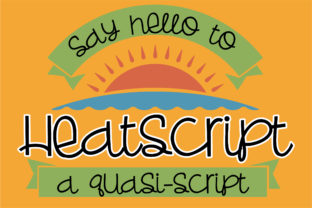
Heatscript is more than a playful handwritten font—it’s a deliberate design tool with measurable impact on perception, engagement, and brand coherence. Designed with warmth, rhythm, and subtle irregularity, Heatscript balances approachability and intentionality. Its “charming twist” isn’t decorative whimsy; it’s a carefully calibrated variation in stroke weight, letter spacing, and baseline flow that signals authenticity without sacrificing legibility or professionalism. For creators who understand that typography shapes how messages land—not just how they look—Heatscript offers strategic leverage where warmth, memorability, and human-centered tone matter most.
Why Heatscript Fits Real-World Goals—Not Just Aesthetic Preferences
Choosing a font is rarely about preference alone. It’s a decision tied to outcomes: increased email open rates, stronger workshop participation, higher conversion on limited-edition product pages, or clearer differentiation in saturated markets. Heatscript supports those goals when applied with purpose—not as background decoration, but as an active voice in your communication system.
Consider its effect on attention economy dynamics. In environments flooded with sterile sans-serifs and algorithm-optimized UI fonts, Heatscript stands out precisely because it resists automation. That contrast isn’t accidental—it invites pause, signals care, and subtly reinforces the idea that what follows was crafted, not generated. That psychological shift matters for educators designing course landing pages, freelancers pitching custom services, or small business owners launching seasonal campaigns.
Where Heatscript Delivers Measurable Value
Heatscript excels in contexts where emotional resonance and clarity coexist:
- Brand storytelling assets: Logo lockups (when paired with a neutral supporting font), brand guidelines documents, or founder-led video thumbnails benefit from Heatscript’s warmth—especially for service-based businesses where trust and personality drive decisions.
- Customer-facing microcopy: Email subject lines, CTA buttons (“Grab Your Spot”, “Let’s Start Here”), or limited-time offer banners gain urgency and friendliness without sounding salesy.
- Educational materials: Workshop workbooks, downloadable checklists, or onboarding PDFs use Heatscript to soften information density and reinforce a supportive, non-intimidating learning environment.
- Print and physical touchpoints: Event signage, packaging inserts, or thank-you cards printed on textured stock amplify Heatscript’s tactile charm—creating continuity between digital and real-world experience.
Note: Its effectiveness diminishes in long-form body copy, data-heavy dashboards, or accessibility-critical interfaces. Heatscript is not a replacement for functional typography—it’s a precision instrument for moments that require tonal emphasis.
How to Use Heatscript Intentionally—Not Impulsively
Start with outcome mapping—not aesthetics. Ask: What behavior or feeling do I want this element to support? If the answer is “feel more personal,” “stand out in a feed,” or “signal handmade quality,” Heatscript may be appropriate. If the goal is “scan quickly,” “convey technical authority,” or “support screen reader navigation,” it likely isn’t.
Pairing is non-negotiable. Heatscript gains credibility—and avoids looking unpolished—when anchored by a clean, highly legible companion font (e.g., Inter, Lora, or Source Sans Pro). Use Heatscript for headlines, short labels, or accent phrases; reserve the supporting font for paragraphs, captions, and interface labels. This hierarchy maintains readability while letting Heatscript do its expressive work.
Also consider context sensitivity. A SaaS company’s pricing page might use Heatscript only on the “Most Popular” badge—not the plan names or feature lists. A children’s book illustrator might apply it to chapter titles and character speech bubbles, but keep body text in a child-friendly serif. The key is consistency within defined boundaries—not blanket application.
Risks of Using Heatscript Without Strategy
Without clear intent, Heatscript can unintentionally undermine credibility. Overuse dilutes its impact and risks visual fatigue. Worse, applying it to low-stakes or inappropriate elements—like error messages, legal disclaimers, or multi-step form instructions—introduces friction where clarity is essential.
It also carries implicit positioning cues. Heatscript leans into warmth, informality, and craft. That aligns well with wellness coaches, indie publishers, or artisanal food brands—but may misfire for corporate law firms, enterprise IT vendors, or medical device manufacturers unless carefully contextualized (e.g., used only in patient education handouts, not compliance documentation).
Another under-discussed risk: inconsistent execution. Because Heatscript’s charm lives in its organic variation, poor rendering across devices—or suboptimal kerning in certain applications—can make text appear uneven or unprofessional. Always test at actual usage sizes (not just mockups) and verify output in final formats: PDF exports, email clients, and mobile previews.
Practical Planning Tips Before You Implement
- Define one primary use case first. Don’t try to deploy Heatscript everywhere at once. Pick a single high-impact, low-risk surface—like email headers or social media story text—and measure engagement before expanding.
- Document pairing rules. Specify exact font weights, sizes, line heights, and color contrast ratios for both Heatscript and its supporting typeface. Share this as a living reference—not just for designers, but for marketers and content creators who add text to templates.
- Test with real users—not just peers. Show two versions of a landing page headline: one in Heatscript, one in your standard font. Ask open-ended questions: “What does this headline make you feel?” “What would you expect to find next?” Compare responses for shifts in perceived tone and intent.
- Assess technical constraints early. Verify Heatscript’s web font loading performance (especially if self-hosted), fallback behavior, and compatibility with your CMS or email platform. Some tools auto-convert special characters or strip stylistic sets—diminishing its nuance.
- Plan for evolution. Fonts age. What feels fresh and distinctive today may blend in tomorrow. Build review points into your brand calendar—e.g., reassess Heatscript’s role every 18 months alongside broader voice and visual updates.
Long-Term Positioning: Beyond Trend Adoption
Heatscript’s enduring value lies in how it supports long-term brand coherence—not short-term novelty. When used consistently in service of a defined audience insight (e.g., “Our customers seek expertise wrapped in approachability”), it becomes part of a recognizable pattern—not a one-off flourish.
That pattern builds recognition faster than expected. Customers begin to associate Heatscript’s rhythm with your tone, much like how specific color palettes or illustration styles function as silent identifiers. Over time, that recognition translates into reduced cognitive load during interactions—people process your messaging more efficiently because they’ve learned your visual language.
But that only works when Heatscript reflects something authentic about your operation—not just your design preferences. If your team communicates with consistent warmth and responsiveness, Heatscript amplifies that reality. If your customer service is transactional and slow, slapping Heatscript on response templates creates dissonance—not charm.
In practice, this means auditing your customer journey touchpoints holistically before committing to Heatscript. Does your support email signature match the tone implied by your Heatscript headline? Does your checkout flow feel as human-centered as your Heatscript-labeled “Thank You” screen? Alignment—not ornamentation—is what makes Heatscript stick.
A Final Strategic Observation
Typography choices reveal priorities. Choosing Heatscript signals you value emotional resonance as much as functional clarity—and that you’re willing to invest in the subtle craft required to execute it well. That’s not frivolous. It’s evidence of intentionality: a quiet but powerful differentiator in markets where attention is scarce and authenticity is earned, not assumed.
So use Heatscript not to make things “look fun,” but to make them feel considered—to signal, in a split second, that the person behind the message saw the human on the other side of the screen, and designed accordingly.