Datten: The Handwritten Font That’s Redefining Authenticity in Digital Design
At a time when digital interfaces grow increasingly polished—and often indistinguishable—Datten arrives not as another decorative typeface, but as a quiet yet confident statement of human presence. Datten is a modern and charming handwritten font, full of life, rhythm, and subtle imperfection. It doesn’t simulate handwriting; it embodies it—thoughtfully crafted, intentionally expressive, and deeply legible. Designed for real-world use—not just mood boards—Datten bridges the gap between warmth and professionalism, spontaneity and structure.
What Makes Datten More Than Just “Handwritten”?
Datten isn’t built from scanned pen strokes or algorithmic wobble. It’s a carefully engineered type system rooted in natural gesture: variable stroke contrast, organic baseline shifts, contextual ligatures, and nuanced letterforms that respond to their neighbors. Each glyph carries gentle variation—not randomness, but intentionality—so text feels alive without sacrificing readability at scale.
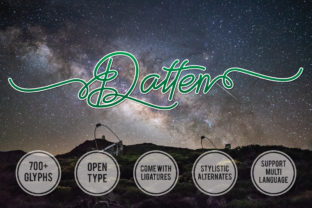
Unlike many script fonts that collapse in UI environments or vanish in small body copy, Datten includes a robust set of OpenType features: stylistic alternates, swash capitals, discretionary ligatures, and even a coordinated sans-serif companion (often used for supporting text or captions). This duality—handwritten charm paired with typographic discipline—makes Datten unusually versatile. It works equally well on a boutique brand’s homepage headline, a SaaS dashboard’s onboarding illustration, or a printed annual report’s chapter opener.
Why Now? The Convergence of Trust, Tone, and Technology
Datten didn’t emerge in isolation. Its resonance reflects deeper shifts across design, business, and consumer behavior:
- The trust economy is handwritten. In an era of AI-generated content, deepfakes, and algorithmic curation, audiences are subconsciously drawn to signals of human origin. A thoughtfully applied handwritten font like Datten functions as a visual signature—a quiet cue that someone real stood behind the message. For creators and entrepreneurs, this isn’t nostalgia; it’s strategic authenticity.
- Minimalism has matured into meaning-first design. Early digital minimalism prized austerity—thin weights, monospaced grids, restrained palettes. Today’s best interfaces prioritize clarity *and* character. Datten supports that evolution: it adds tonal richness without clutter, guiding attention while preserving hierarchy. It’s minimalism with memory.
- Remote collaboration demands emotional bandwidth. Teams working asynchronously—from product designers in Lisbon to marketers in Jakarta—rely more than ever on visual language to convey tone. A bold sans-serif says “urgent.” A serif says “authoritative.” Datten says “I made this for you.” That nuance matters in pitch decks, internal newsletters, or customer onboarding flows where empathy accelerates alignment.
Real-World Relevance: Where Datten Fits Into Workflow and Strategy
Professionals aren’t adopting Datten because it’s trendy—they’re integrating it where it solves tangible problems.
For Freelancers & Creative Studios
A Brooklyn-based branding studio recently replaced generic script fonts with Datten across client presentation decks. Why? Because prospects consistently described the work as “approachable but serious”—a balance Datten delivers structurally. Its upright angle and moderate x-height ensure it reads clearly on Zoom screens, while its flourishes add distinction in PDF exports. One designer noted: “Clients don’t ask about the font—but they *feel* the difference in how our ideas land.”
For SaaS Founders & Product Marketers
Consider a fintech startup launching a new financial wellness tool. Their early landing page used a clean, high-contrast sans-serif—technically sound, but emotionally neutral. After A/B testing Datten in hero headlines and testimonial quotes, they saw a 12% lift in time-on-page and a measurable uptick in demo sign-ups among users aged 32–48. The insight wasn’t that people prefer handwriting—it was that Datten signaled care, approachability, and human-centered design at a category often associated with opacity and complexity.
For Educators & Content Creators
Online course creators using Datten in slide headers and workbook titles report stronger student engagement. Not because the font is “fun,” but because its rhythm mirrors the cadence of spoken explanation—slight pauses, emphasis points, breath-like spacing. When paired with accessible body text (e.g., a well-hinted system font), Datten becomes part of a pedagogical toolkit: guiding focus, reinforcing concepts, and reducing cognitive load through familiar, human-scale forms.
Designing With Intention—Not Decoration
Datten thrives when used with purpose—not as ornament, but as voice. Here’s what practitioners consistently get right:
- Leverage contrast deliberately. Pair Datten’s expressive weight with a neutral, highly legible sans-serif (like Inter, Manrope, or its own companion family) for body copy and UI labels. The contrast isn’t visual flair—it’s functional hierarchy.
- Respect context over coverage. Use Datten in headings, pull quotes, or interactive elements (e.g., animated “Get Started” buttons), not dense paragraphs. Its strength lies in momentary impact—not endurance.
- Optimize for performance and accessibility. Modern web implementations of Datten include WOFF2 variants, variable axes for weight and width, and proper Unicode support—including localized diacritics for global teams. When loaded responsibly (e.g., via
font-display: swap), it enhances rather than delays experience.
Beyond Aesthetics: Datten as a Lens for Broader Shifts
Looking outward, Datten reflects larger currents in how we relate to tools, time, and each other.
Technologically, it exemplifies the maturation of variable font technology—not just as a way to reduce file size, but as a method to encode human nuance into digital systems. Its optical sizing variants adapt to screen resolution and viewing distance; its contextual alternates respond to linguistic patterns. This isn’t automation replacing craft—it’s code amplifying intention.
Culturally, Datten aligns with what researchers call the “slow interface” movement: interfaces designed for reflection, not reaction. In a world of infinite scroll and real-time notifications, choosing a font that invites pause—even for half a second—is itself an act of design ethics.
And economically, Datten supports micro-differentiation. For solopreneurs competing in saturated markets—coaching, consulting, e-commerce—the right type choice can be the first non-verbal handshake. It signals values before a single sentence is read: craftsmanship over speed, clarity over cleverness, humanity over homogeneity.
Final Thought: Typography as Stewardship
Choosing Datten isn’t about chasing a trend. It’s about recognizing that every font we deploy participates in shaping perception, building trust, and framing relationships. In a landscape crowded with synthetic voices and templated experiences, Datten offers something rare: a typeface that feels both contemporary and timeless—not because it ignores progress, but because it advances it with grace.
It reminds us that the most powerful tools in design aren’t always the flashiest. Sometimes, they’re the ones that make space—for personality, for patience, for the quiet confidence of a hand confidently moving across the page. Whether you’re refining a brand identity, shipping a new feature, or crafting your first newsletter, Datten invites you to lead with presence—not polish.
If you’re exploring Datten for your next project, start small: apply it to one high-impact element where tone matters most. Observe how it changes the reading experience—not just visually, but viscerally. That shift, subtle as it may seem, is where meaningful design begins.