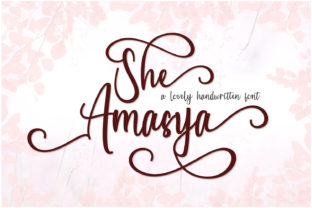
She Amasya
She Amasya isn’t just another script font—it’s a quiet evolution in typographic expression. Designed with confident strokes and intentional contrast, it balances fluidity with presence. Its letterforms carry the warmth of hand-drawn elegance but land with the clarity and weight needed for modern screens, print, and branding. That “bold twist” isn’t decorative exaggeration; it’s structural intention—thicker downstrokes, subtle swelling at terminals, and generous spacing that keeps romance legible, not ornamental. For creators who’ve grown wary of scripts that vanish at small sizes or overwhelm at large ones, She Amasya offers something rare: emotional resonance without sacrificing function.
Why Script Fonts Are Reclaiming Center Stage
Over the past five years, script fonts have shifted from niche accents to strategic tools—especially in spaces where authenticity and human connection matter most. Think beyond wedding invites: subscription box unboxing videos, boutique skincare labels, independent course landing pages, teacher-led newsletters, even SaaS onboarding emails that aim to soften technical complexity. Users aren’t rejecting clean, minimalist design—they’re seeking balance. A crisp sans-serif headline paired with a thoughtfully chosen script like She Amasya creates visual rhythm and psychological warmth. It signals care, individuality, and intention—not just aesthetics, but attitude.
This isn’t nostalgia-driven. It’s response-driven. As digital fatigue rises—and attention fragments across devices, platforms, and formats—readers subconsciously gravitate toward type that feels *made*, not generated. She Amasya delivers that impression without demanding calligraphic expertise. Its consistency across weights and characters means designers don’t need to manually adjust kerning for every word, and developers can embed it reliably without fallback concerns.
From Decoration to Differentiation
Businesses and creators increasingly face a paradox: standing out requires both distinctiveness *and* familiarity. Too much novelty confuses. Too much sameness blends in. She Amasya sits in that productive middle ground. It reads as romantic and approachable—but not cutesy, not dated, not overly formal. That makes it adaptable across industries where tone matters deeply but varies widely: a yoga studio’s seasonal workshop poster, a financial advisor’s client thank-you note, a ceramicist’s Instagram story announcing new pieces.
Consider how voice works in audio branding—subtle shifts in pace, pitch, and pause shape perception. Typography does the same visually. She Amasya’s rhythm encourages slower reading. Its slight swash on the capital S, its gentle exit stroke on the lowercase y, its balanced x-height—all invite pause, not skimming. That’s valuable when you’re asking someone to sign up, reflect, remember, or trust.
Real-World Integration, Not Just Inspiration
Using She Amasya effectively isn’t about applying it everywhere. It’s about knowing where its strengths align with your goal. Here’s how professionals are putting it to work:
- Branding systems: Paired with a neutral, highly legible sans-serif (like Inter or Manrope), She Amasya often anchors logotypes or sub-brands—think “The Daily Bloom” as a newsletter title beneath a clean, functional header font.
- Digital product moments: Used sparingly in UI elements where emotion supports action—e.g., a “You’re all set!” confirmation message after checkout, or a personalized milestone badge (“First 30 Days Complete”) in a learning app.
- Print collateral: Especially effective on textured paper stocks where its boldness holds up against tactile variation—letterpress business cards, foil-stamped packaging, or limited-run zines.
- Educational content: Teachers use it in slide headers or printable reflection prompts to signal a shift in mode—from instruction to invitation (“What moved you today?”).
One freelance copywriter shared how switching from a generic script to She Amasya increased email open rates by 7% over three months—not because the font “converted,” but because recipients reported feeling the messages were “more personal, less templated.” That’s the quiet power of considered typography: it shapes perception before a single word is read.
Technical Fit for Today’s Workflows
She Amasya was built for real-world constraints. It includes full Latin character sets, standard OpenType features (ligatures, stylistic alternates), and robust hinting for screen rendering—even at 14px on mobile. No more squinting at fuzzy script text in email clients or CMS previews. It’s available in variable font format, meaning designers can fine-tune weight along a continuous axis instead of choosing between rigid “Light” or “Bold” options. That flexibility matters when adjusting for accessibility contrast ratios or responsive breakpoints.
For developers embedding it via Google Fonts or self-hosting, file size remains lean—under 80KB for the full set. That’s critical when every kilobyte impacts Core Web Vitals. And unlike many display fonts that rely on elaborate CSS tricks for fallback behavior, She Amasya’s design ensures graceful degradation: if the font fails to load, the intended hierarchy and emphasis remain legible in the system font stack.
Not Just for “Romantic” Projects
The phrase “add a romantic touch” is descriptive—not prescriptive. Romance here isn’t confined to love letters or Valentine’s Day campaigns. It’s about warmth, sincerity, and humanity. A nonprofit using She Amasya in their annual impact report isn’t being frivolous; they’re signaling that data serves people, not the other way around. A therapist’s website using it in section dividers isn’t undermining professionalism—it’s reinforcing safety and empathy.
That broader interpretation reflects a larger cultural shift: audiences increasingly value brands and creators who acknowledge complexity without oversimplifying it. She Amasya’s duality—fluid yet grounded, expressive yet controlled—mirrors that expectation. It doesn’t shout. It leans in.
Getting Started Thoughtfully
If you’re considering She Amasya for an upcoming project, start small. Try it in one high-impact location first: a hero section headline, a signature line in an email footer, or the title of a downloadable guide. Test it across devices—not just for legibility, but for emotional alignment. Does it feel like *your* voice, or someone else’s idea of it?
Avoid stacking multiple decorative fonts. She Amasya earns attention; it doesn’t need competition. Pair it with typefaces that provide clear contrast in form and function—geometric sans-serifs for structure, sturdy serifs for body text, even monospaced fonts for code snippets or technical details. Let it breathe: generous line height, ample letter spacing in all-caps usage, and thoughtful color contrast (deep charcoal instead of pure black often enhances its warmth).
And remember: typography is never neutral. Every font choice carries implicit associations. She Amasya communicates care, craft, and quiet confidence—not because it’s marketed that way, but because its design decisions support those qualities in practice. That’s why it resonates across age groups and professions: it meets people where they are, then gently invites them to linger a little longer.