Names
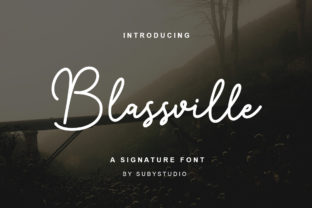
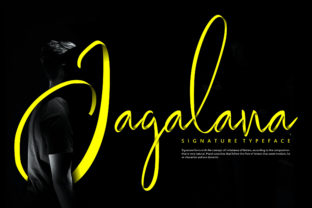
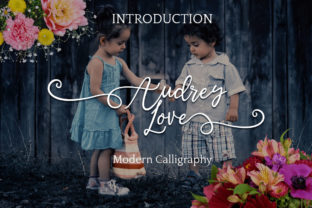
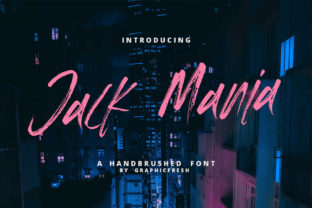
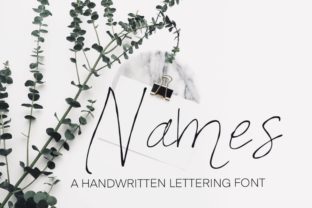
Names isn’t just another handwritten font—it’s a quiet shift in how designers, brands, and creators signal sincerity. At first glance, it’s deceptively simple: clean letterforms, subtle variation in stroke weight, and a rhythm that feels human—not scripted, not algorithmic, but carefully considered. Its elegance lies in restraint. There are no exaggerated flourishes or forced quirks. Instead, Names offers gentle curves, consistent spacing, and a warmth that reads as intentional rather than incidental. That balance—between legibility and personality, between craft and clarity—is why it resonates across contexts far beyond invitation suites or café menus.
A Handwritten Font That Doesn’t Try Too Hard
In an era saturated with hyper-stylized typefaces—fonts designed for virality, for thumbnail dominance, for instant recognition—Names stands apart by refusing to shout. It doesn’t mimic calligraphy tools or simulate ink bleed; it interprets handwriting through a contemporary lens. The lowercase a and g follow familiar shapes, not historical scripts. The capital N anchors the family with quiet confidence, neither rigid nor slouching. This groundedness makes Names unusually versatile: it works in a minimalist brand identity system just as well as it does in a personal newsletter header or a teacher’s classroom handout.
What’s notable isn’t just how it looks—but how it behaves. Names scales cleanly from small UI labels (at 14px) to large-format signage (at 120px), retaining its character without distortion. It pairs naturally with neutral sans-serifs like Inter or Helvetica Neue—not as a “contrast” pairing, but as a thoughtful counterpoint: one voice speaking clearly, the other speaking personally. That kind of functional harmony is rare among display-oriented handwritten fonts.
Why Authenticity Isn’t Just a Buzzword Anymore
Consumers—and especially adults aged 25 to 45—increasingly navigate digital spaces with heightened sensitivity to tone. A generic stock photo, an over-optimized landing page, or a logo that feels templated can trigger subconscious disengagement. This isn’t about nostalgia for “the handmade.” It’s about cognitive ease: when typography signals intentionality, viewers spend less mental energy decoding whether something feels trustworthy, relevant, or worth their attention.
Names supports that need without leaning on clichés. Unlike fonts that lean heavily into “rustic,” “vintage,” or “boho” aesthetics—styles that risk dating quickly or alienating certain audiences—Names operates in a more neutral emotional register. It conveys care, not costume. That’s why educators use it for student-facing materials (a welcome break from sterile system fonts), why indie publishers choose it for author bios (adding quiet distinction without pretense), and why service-based freelancers apply it to proposal headers (softening formality without sacrificing professionalism).
Evolving Beyond the “Handwritten” Category
Five years ago, most handwritten fonts were siloed: used almost exclusively for logos, social media graphics, or wedding stationery. Today, they’re embedded deeper in workflows—from Figma design systems to email templates in Mailchimp, from Notion page headers to printable workshop worksheets. What changed wasn’t just tooling, but expectation. People now assume digital interfaces can—and should—carry expressive nuance, even in functional contexts.
Names reflects that evolution. Its OpenType features include standard ligatures and contextual alternates, enabling subtle variation in repeated characters (like double ls or ss) without manual intervention. Designers don’t need to swap glyphs manually to avoid repetition; the font handles it gracefully. That kind of quiet intelligence—built-in, not bolted-on—makes Names practical for real-world use, not just mood boards.
It also avoids common pitfalls. Many handwritten fonts sacrifice readability at smaller sizes or introduce inconsistent baseline alignment that disrupts line-height calculations. Names was tested across devices and rendering engines—including older versions of Safari and Windows Edge—to ensure typographic integrity holds up where it matters most: in live, shipped products.
Where Names Fits Into Real Creative Workflows
Consider a small business owner launching a new line of organic skincare. They want packaging that feels personal but not precious, trustworthy but not clinical. Using Names for product names and ingredient callouts—paired with a crisp, low-contrast sans-serif for regulatory text—creates hierarchy rooted in voice, not just size. The result isn’t “cute” or “artsy”; it’s cohesive, calm, and quietly confident.
Or take a freelance copywriter building a portfolio site. Instead of defaulting to a trending variable font or a monospace headline treatment, they apply Names to section titles (“What I Do,” “Recent Work,” “Let’s Talk”). Instantly, the site gains approachability—without diluting expertise. Visitors perceive effort, not affectation.
Even in education, the implications are tangible. A high school history teacher uses Names for slide deck titles and handout headers—not to “make it fun,” but to signal that this material has been curated, not copied from a template. Students notice the difference, even if they can’t name why. That subtle cue supports engagement, not distraction.
Practical Considerations Before You Use It
Names excels in short-to-medium length text: headlines, pull quotes, labels, signatures, and branding elements. It’s not intended for long-form body copy—its charm lives in contrast and intentionality, not endurance. When selecting weights, stick to the Regular and Medium variants for most applications; the Light can feel too delicate at smaller sizes, and the Bold, while available, shifts the font’s character more than most users anticipate.
Licensing is straightforward: desktop, web, and app usage are covered under standard commercial licenses, with clear terms for SaaS platforms and client deliverables. No hidden tiers or usage caps—just transparency, which aligns with the font’s overall ethos.
And while Names invites warmth, it doesn’t demand whimsy. You don’t need to redesign your entire visual language to use it effectively. Start small: replace a single heading on your homepage. Swap out the default font in your email signature. Apply it to one section of a presentation. Observe how it changes perception—not dramatically, but meaningfully.
Not a Trend. A Tool With Quiet Longevity.
Fonts come and go. Some explode in popularity, then fade as their stylistic cues become overused or culturally dated. Names avoids that cycle by anchoring itself in fundamentals: proportion, rhythm, and restraint. It doesn’t chase novelty. Instead, it meets current needs—authenticity without artifice, personality without performance—by doing less, not more.
That makes it useful today, and likely useful five years from now—not because it’s “timeless” in a museum sense, but because it responds to enduring human preferences: clarity over clutter, sincerity over spectacle, craft over convenience. It won’t solve brand strategy or replace thoughtful content. But when deployed with intention, Names helps ideas land with greater resonance. And in a world where attention is scarce and trust is earned, that kind of quiet effectiveness matters.