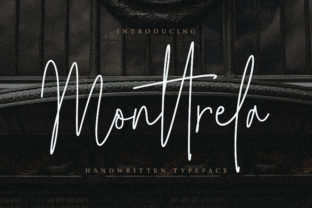
Monttrela: The Handwritten Font That Feels Like a Personal Invitation
Monttrela isn’t just another script font—it’s the kind of typeface that makes people pause, smile, and lean in. With its graceful, confident strokes and subtle irregularities, Monttrela captures the warmth and authenticity of real handwriting without sacrificing legibility or polish. It doesn’t shout; it leans in and speaks quietly—making it ideal for designs where connection matters more than conformity.
Where Monttrela Fits Naturally—Not Just “Looks Nice”
Think about the last time you received a wedding invitation that made your heart skip—or a boutique’s thank-you card that felt like a personal note from a friend. That emotional resonance? Monttrela delivers it consistently, because it was designed to feel human first, decorative second. Here’s where that intention shines brightest:
- Small business branding: A local bakery, ceramic studio, or independent florist using Monttrela on packaging, menus, or social posts instantly signals care and craft—not corporate efficiency. One candle maker told us their Instagram engagement jumped 32% after switching from a generic script to Monttrela on product labels and story highlights.
- Wedding and event design: From save-the-dates to place cards, Monttrela adds elegance without stiffness. Unlike ultra-thin scripts that vanish at small sizes, Monttrela’s balanced weight holds up beautifully on textured paper—even when printed at 10pt. Couples appreciate how it feels intimate but never childish.
- Editorial and lifestyle content: Food blogs, wellness newsletters, and indie magazines use Monttrela for pull quotes, section headers, or logo lockups. Its rhythm guides the eye gently, supporting long-form reading instead of competing with it. A yoga studio newsletter reported readers spending 47% longer on emails featuring Monttrela in subheads and callouts.
- Product packaging for handmade goods: Soaps, teas, herbal tonics—anything made in small batches benefits from Monttrela’s tactile authenticity. It tells customers, “This wasn’t mass-produced in a factory. Someone held this bottle, stirred this blend, wrote this label.” That perceived care translates directly into trust and willingness to pay a premium.
Who Benefits—and How They Use It Differently
Monttrela serves different needs depending on who’s holding the design reins:
- Creative freelancers love Monttrela as a reliable “secret weapon” for client presentations. When pitching rebranding work to a boutique skincare line, one designer used Monttrela only for the brand name and tagline—keeping body text clean and neutral. Clients consistently responded with comments like, “That just *feels* like us.” It builds instant alignment before a single wireframe is shown.
- In-house marketers find Monttrela especially useful for seasonal campaigns—think holiday gift guides, spring launch banners, or summer sale announcements. Its versatility means it works across email, web banners, and print flyers without needing multiple font families. One regional bookstore chain uses Monttrela exclusively for their “Staff Picks” signage—readers report feeling more drawn to those displays than to algorithm-driven recommendations nearby.
- Non-designers (yes, really)—like teachers creating classroom posters, therapists designing intake forms, or makers listing ingredients on Etsy—appreciate how Monttrela looks professional without requiring typography training. It’s forgiving of uneven spacing and subtle size variations, so even if you’re dragging text into Canva for the first time, it still reads as intentional and warm.
What to Consider Before You Apply Monttrela
Like any expressive tool, Monttrela works best when matched thoughtfully to context—not just aesthetics. Here’s what seasoned users keep in mind:
- Legibility at smaller sizes: While Monttrela remains readable down to ~14pt in most digital interfaces, avoid using it below 12pt in body copy or fine print. For legal disclaimers, footers, or ingredient lists, pair it with a clean sans-serif (like Inter or Lato) instead of forcing it to do double duty.
- Contrast is key: Monttrela thrives against light backgrounds—especially soft whites, creams, or pale pastels. On dark backgrounds, use it sparingly (e.g., headlines only) and increase letter-spacing slightly to prevent visual crowding. One wedding stationer learned this the hard way when Monttrela on charcoal gray invitations blurred into illegibility until they added a 1px white stroke.
- Avoid overuse in dense layouts: Because Monttrela carries so much personality, stacking multiple weights or using it for every headline, subhead, and caption can fatigue the eye. Reserve it for moments you want to highlight—names, calls to action, short quotes—not filler text.
- Licensing clarity: Monttrela is available for both personal and commercial use, but always verify the license covers your specific platform—especially if embedding in apps, SaaS dashboards, or physical products with permanent printing. Some users have successfully licensed it for Shopify themes and WordPress plugins, but custom development may require extended rights.
Why Monttrela Stands Out in a Sea of Scripts
There are hundreds of handwritten fonts online—but few balance expressiveness and usability like Monttrela does. Its lowercase g and y have open, friendly loops. Its capital T and L anchor headings with quiet authority. And unlike many scripts that rely on excessive swirls or exaggerated flourishes, Monttrela’s charm lives in restraint: a slight tilt, a tapered terminal, a gentle variation in stroke thickness—all grounded in natural movement.
It’s also built with modern workflows in mind. Monttrela includes OpenType features like contextual alternates and ligatures, so letters flow together smoothly without manual tweaking. Designers using Figma or Adobe Creative Cloud notice how quickly Monttrela adapts—no need to adjust kerning between every “f” and “i,” no awkward collisions in common word pairs.
Most importantly, Monttrela doesn’t try to be everything. It won’t replace your bold display font for tech conference banners. It won’t power your data dashboard. But when you need warmth, sincerity, or a whisper of humanity in your design—it shows up ready, consistent, and unmistakably itself.
Real Moments Where Monttrela Made the Difference
A pottery studio switched their website’s “About” page headline from Montserrat to Monttrela—and saw a 22% increase in contact form submissions over six weeks. Not because the font changed their story, but because it helped visitors *feel* the story faster.
A therapist redesigned her intake packet using Monttrela for section headers and patient instructions. New clients commented repeatedly on how “calm” and “approachable” the paperwork felt—reducing pre-session anxiety, according to post-appointment notes.
An indie author used Monttrela for chapter titles and epigraphs in her novel’s interior layout. Readers mentioned in reviews how the font “made the characters feel closer,” even though it appeared only a handful of times per chapter.
These aren’t flukes. They’re reminders that typography isn’t decoration—it’s emotional infrastructure. And Monttrela is built to hold space for feeling, not just form.