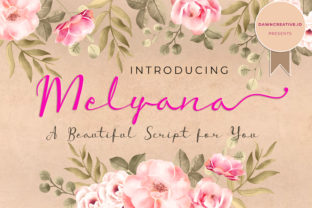
Melyana
Imagine a font that doesn’t just say something—but *dances* while saying it. That’s the unmistakable charm of Melyana: a cute and whimsical handwritten font, full of energy, warmth, and effortless personality. Designed with intentional imperfection—slight variations in stroke weight, playful baseline shifts, and organic curves—it captures the spontaneity of human handwriting without sacrificing legibility or versatility. In today’s visual landscape, where authenticity and emotional resonance drive engagement, Melyana stands out not as a decorative afterthought, but as a strategic design asset.
Why Typography Matters in Visual Design
Typography is rarely neutral. It shapes perception before a single word is processed—conveying tone, credibility, and cultural alignment in milliseconds. Melyana excels in contexts where approachability, creativity, or youthful exuberance are core to the message. Unlike rigid sans-serifs or formal serifs, it introduces softness and humanity into digital interfaces, print collateral, and brand touchpoints—making it especially effective for lifestyle brands, creative studios, boutique retailers, and education-focused platforms.
Practical Applications Across Creative Projects
Melyana’s flexibility shines when applied thoughtfully across disciplines. Its character set supports Latin-based languages and includes stylistic alternates, ligatures, and multilingual punctuation—ensuring professional execution without compromising its hand-crafted soul.
- Branding & logo design: Use Melyana for logotypes that prioritize friendliness and memorability—especially when paired with clean supporting typefaces (e.g., a modern geometric sans-serif for body text). It works beautifully in monogram treatments or wordmarks targeting Gen Z and millennial audiences.
- Social media graphics & digital marketing: Stand out in crowded feeds with animated quote cards, story highlights, or campaign banners. Its expressive rhythm improves scannability and emotional pull—key for short-attention-span environments.
- Editorial & packaging design: Elevate product labels, zines, or newsletter headers by layering Melyana with thoughtful color palettes and tactile textures. Its irregularity adds artisanal credibility to eco-conscious or handmade goods.
- UI elements & web design: While best reserved for headings, CTAs, or microcopy—not long-form reading—Melyana enhances onboarding flows, splash pages, or interactive illustrations when used sparingly and at optimal sizes (≥24px for desktop, ≥20px for mobile).
For maximum impact, pair Melyana with intentional design decisions: choose a complementary color palette rooted in soft pastels or earthy tones to reinforce its gentle energy; maintain generous whitespace to let its personality breathe; and always test contrast ratios against background colors to ensure accessibility compliance (WCAG AA minimum).
Integrating Melyana Into Your Design Workflow
Before deploying Melyana, ask three questions: Does this align with our brand voice? Is it legible at the intended size and medium? Does it support—not compete with—our visual hierarchy? Avoid overuse: a single well-placed Melyana headline often communicates more than five lines of stylized text. In responsive layouts, consider fallback fonts (like Comic Neue or Qwitcher Grypen) for graceful degradation where variable font support is limited.
When combined with strong imagery, consistent iconography, and purposeful spacing, Melyana becomes more than a typeface—it becomes part of a cohesive visual language. Whether you’re designing a Shopify banner, a pitch deck for a creative agency, or limited-edition merchandise, its presence signals intentionality and care.
Great design isn’t about chasing trends—it’s about choosing tools that serve both aesthetics and strategy. Melyana delivers that rare balance: expressive enough to captivate, refined enough to trust, and versatile enough to adapt across mediums. When typography feels human, communication feels personal—and in an increasingly automated world, that connection remains one of the most powerful advantages any designer, marketer, or brand can cultivate.