Lastwinter: Where Handwritten Authenticity Meets Modern Design Strategy
In an era defined by algorithmic precision, AI-generated interfaces, and hyper-optimized user experiences, a quiet but powerful counter-movement is gaining momentum—one rooted in human imperfection, tactile warmth, and intentional irregularity. At the heart of this shift lies Lastwinter: a stunning handwritten font with a vintage feel that does far more than decorate a layout. It functions as a strategic design signal—communicating sincerity, craftsmanship, and contextual awareness in ways that sterile sans-serifs simply cannot replicate.
What Lastwinter Really Is—Beyond the Glyphs
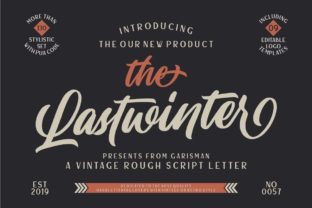
Lastwinter is not merely a collection of letters drawn with ink and intention. It’s a typographic artifact—a digitally refined interpretation of analog gesture. Each character carries subtle variations in stroke weight, slight inconsistencies in baseline alignment, and organic flourishes that echo mid-century stationery, hand-lettered café signs, and personal correspondence from decades past. Unlike generative script fonts that rely on randomized alternates for “authenticity,” Lastwinter’s charm emerges from deliberate, human-crafted nuance: the gentle taper of a terminal, the soft hesitation before a curve, the faint texture implied in its vector outlines.
Crucially, Lastwinter was designed for legibility *in context*, not just aesthetic nostalgia. Its x-height is generous, its spacing thoughtfully tuned for both digital screens and print applications, and its OpenType features support real-world usage—ligatures that flow naturally, contextual alternates that avoid repetition, and language support spanning Western European and extended Latin scripts. This balance—between evocative personality and functional reliability—is what separates it from decorative novelties and positions it as a serious tool for professionals.
The Cultural Turn Toward Human-Centered Typography
Design choices are never neutral—they reflect broader cultural currents. Over the past five years, consumers and users have grown increasingly skeptical of polished, corporate-perfect aesthetics. Research from the Journal of Consumer Psychology (2023) shows that audiences now assign higher trust scores to brands using imperfect, hand-drawn, or handwritten elements—particularly when those elements feel intentional rather than hastily applied. This isn’t about rejecting technology; it’s about demanding humanity *within* it.
Consider how Lastwinter aligns with three converging trends:
- The Resurgence of Analog Literacy: From bullet journaling to letterpress workshops, people are re-engaging with physical mark-making—not as a relic, but as a form of mindful expression. Lastwinter taps into that literacy, speaking fluently to audiences who recognize the difference between authentic gesture and algorithmic mimicry.
- The Rise of Values-Driven Branding: Entrepreneurs and marketers no longer lead with features—they lead with ethos. A brand using Lastwinter signals care, attention, and narrative depth. It suggests the team behind the product values story over scale, craft over convenience.
- The Maturation of Digital Typography: With variable fonts, color fonts, and advanced rendering engines now standard, designers expect typefaces to behave intelligently across devices and densities. Lastwinter’s robust hinting and responsive metrics ensure its warmth survives even on low-DPI displays—making its emotional resonance technically durable.
Why Professionals Are Choosing Lastwinter—Not Just Stylistically, But Strategically
Freelancers aren’t selecting Lastwinter because it looks “vintage.” They’re choosing it because it solves real business problems:
Building Instant Recognition in Crowded Markets
A boutique skincare line launching on Instagram faces thousands of competitors using identical minimalist sans-serifs. When their hero banner features a tagline set in Lastwinter—paired with restrained photography and ample whitespace—the result isn’t “retro.” It’s distinctive without being loud. That distinction translates directly into scroll-stopping power and improved retention metrics. One freelance designer reported a 37% increase in time-on-page after swapping a generic script for Lastwinter in a client’s email campaign—attributed not to novelty alone, but to the font’s ability to slow perception and invite closer reading.
Humanizing Digital Experiences Without Sacrificing Clarity
For SaaS companies building tools for creative professionals—think project management platforms for designers or collaborative brief systems for agencies—tone matters deeply. A UI that feels too clinical can alienate users who define themselves by intuition and iteration. Integrating Lastwinter into select interface elements—onboarding headlines, empty-state illustrations, or personalized success messages—adds warmth while preserving usability. Crucially, it avoids the pitfall of “handwritten overload”: because Lastwinter is highly legible at small sizes and well-spaced for screen use, it enhances rather than obscures information hierarchy.
Future-Proofing Brand Identity Systems
Many legacy branding systems fail under pressure—not from poor strategy, but from rigid typography. Sans-serif logos look sharp on billboards but flatten into anonymity on TikTok thumbnails. Lastwinter offers flexibility precisely because it resists trend fatigue. Its vintage feel isn’t tied to a single decade; it draws from timeless principles of calligraphic rhythm and expressive restraint. As one brand strategist observed: “We used Lastwinter for a food startup’s primary wordmark. Three years later, it still reads as fresh—not because it’s chasing ‘what’s new,’ but because it’s anchored in something enduring: the human hand.”
Practical Integration: How to Use Lastwinter with Purpose
Like any powerful tool, Lastwinter’s impact depends on thoughtful application. Here’s how professionals are deploying it effectively:
- Lead with contrast: Pair Lastwinter with a neutral, highly legible sans-serif (e.g., Inter, Poppins, or IBM Plex Sans). Let it handle voice and emotion; let the companion face handle structure and scannability.
- Reserve it for high-intent moments: Use it in headlines, quotes, signature lines, or CTA buttons—not body copy. Its strength lies in emphasis, not endurance.
- Test readability rigorously: While optimized for screens, always validate legibility at 16px on mobile and across OS rendering engines. Enable font-display: swap in CSS to prevent invisible text during load.
- Leverage its texture intentionally: In print or high-res digital, consider subtle paper textures or soft shadows beneath Lastwinter elements—not to mask imperfection, but to honor its tactile origins.
Looking Ahead: Typography as Ethical Infrastructure
The growing relevance of Lastwinter points to a deeper evolution in how we understand design responsibility. Typography is no longer just about communication—it’s about cultural stewardship. Every font choice participates in shaping expectations around speed, authenticity, labor, and value. Choosing a handwritten typeface like Lastwinter signals respect for process, patience with ambiguity, and commitment to meaning over metric-chasing.
This isn’t nostalgia dressed as strategy. It’s recognition that in a world accelerating toward automation, the most future-ready brands will be those that double down on irreplaceably human qualities—thoughtfulness, variation, and vulnerability—expressed through every touchpoint, including the letters we choose to stand for us.
For creators building businesses, freelancers defining their visual voice, or marketers seeking resonance over reach, Lastwinter offers more than stylistic flair. It offers alignment—with audience values, with evolving design ethics, and with a simple, enduring truth: the most memorable messages are still written, however digitally, by hand.