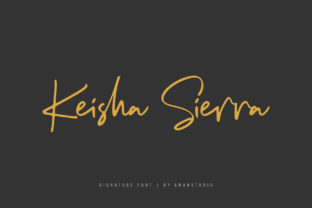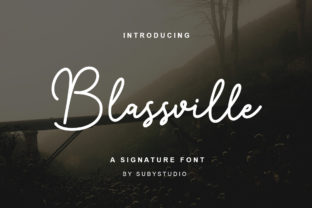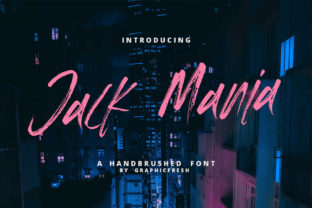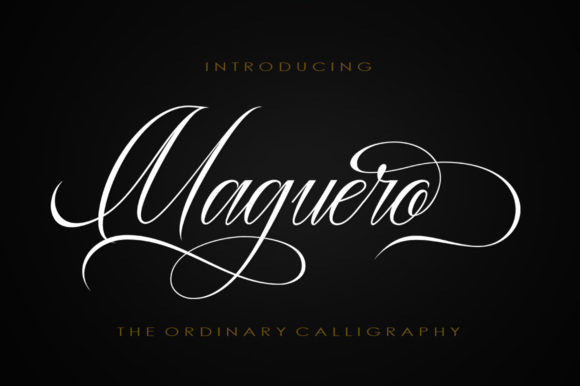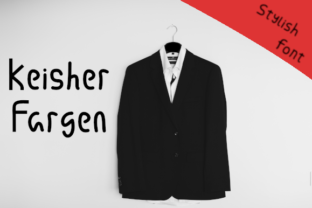
Keisher Fargen: Casual Elegance, Handwritten With Purpose
There’s a quiet confidence in handwriting that feels personal—like a note passed across a desk, a signature on a contract, or a caption beneath a cherished photo. Keisher Fargen captures that feeling without the inconsistency of real pen-on-paper. It’s not overly ornate, nor is it stiffly formal. Instead, it balances approachability and refinement in a way few handwritten fonts do. If you’ve ever hesitated to use script fonts because they felt either too playful or too fussy, Keisher Fargen may be the middle ground you didn’t know you needed.
Why This Font Fits Real Work—Not Just Pretty Mockups
Design isn’t just about aesthetics—it’s about communication with intention. Keisher Fargen works because its rhythm feels natural, not forced. The letterforms have gentle variation in stroke weight, subtle entry and exit strokes, and open counters—details that improve legibility at small sizes and maintain charm at larger ones. That means it performs well where many script fonts falter: in email headers, social media graphics, product labels, or even printed workshop handouts.
Consider a freelance educator creating downloadable lesson plans. A clean sans-serif might feel sterile; a flourished script could distract from content. Keisher Fargen adds warmth and authority simultaneously—supporting credibility while keeping tone inviting. Or imagine a small-batch candle maker designing packaging. Here, the font quietly signals craftsmanship and care—not through embellishment, but through authenticity of gesture. It doesn’t shout “handmade.” It simply feels like it belongs there.
Where Keisher Fargen Saves Time—and Why That Matters
Time isn’t saved only by faster typing or quicker rendering. It’s also conserved when you don’t need to second-guess your typography choices. Because Keisher Fargen has strong internal consistency—its lowercase a, g, and y share similar proportions and energy—it pairs predictably with neutral sans-serifs (like Inter, Poppins, or Lato) for body text. No trial-and-error adjusting tracking or baseline shifts. No last-minute swaps because the script clashed with your brand palette.
This reliability matters most when you’re juggling multiple roles: a blogger who designs their own newsletter graphics, a therapist building a calming website, or a boutique owner updating seasonal signage. You’re not a full-time typographer—you’re solving real problems with limited bandwidth. Choosing Keisher Fargen reduces cognitive load. It gives you one less variable to manage without sacrificing distinctiveness.
Who Benefits Most—and When to Pause
Professionals who regularly communicate visually—marketers drafting Instagram carousels, educators preparing slide decks, publishers laying out poetry chapbooks—often find Keisher Fargen especially useful. Its casual elegance supports storytelling without overshadowing substance. It helps humanize digital interfaces, soften corporate messaging, or add tactile warmth to minimalist layouts.
That said, context always guides fit. Keisher Fargen isn’t ideal for dense paragraphs or data-heavy reports. Its character spacing and connected flow work best at headline size (24px and up) or as short accent text—titles, quotes, callouts, logos, or button labels. If your project requires extended reading in script, consider pairing it intentionally: use Keisher Fargen for section headers and a highly legible serif or sans-serif for body copy. That combination often delivers more impact than forcing one font to do everything.
Practical Pairings That Feel Effortless
Typography harmony isn’t magic—it’s pattern recognition. Keisher Fargen shares an underlying warmth with humanist sans-serifs and low-contrast serifs. Try it with:
- Inter or Manrope for digital dashboards or SaaS landing pages—clean structure meets expressive voice;
- Playfair Display or Cormorant Garamond for editorial layouts where elegance needs grounding;
- IBM Plex Sans or Work Sans for internal presentations where clarity and personality coexist.
Avoid ultra-geometric or high-contrast fonts unless you’re aiming for deliberate tension—like pairing Keisher Fargen with Montserrat Black for a bold event poster. In most cases, restraint yields stronger results.
Small Details, Meaningful Outcomes
Look closely at how Keisher Fargen handles punctuation. Its ampersand (&) has a subtle loop and tilt—recognizable but not distracting. Its quotation marks nest comfortably beside letters rather than floating awkwardly. These aren’t decorative flourishes; they’re functional refinements that keep visual flow intact. That attention shows up in final output: fewer manual kerning adjustments, smoother PDF exports, and more consistent rendering across browsers and devices.
For creators using tools like Canva, Figma, or Adobe Express, this means less time tweaking letter spacing manually—and more time refining message, layout, or audience targeting. It’s the kind of quiet efficiency that compounds: five minutes saved per design, multiplied across dozens of assets per quarter, translates into hours reclaimed for strategy, client feedback, or creative experimentation.
When Simplicity Is Strategic
In a landscape saturated with variable fonts, display super-families, and AI-generated type experiments, Keisher Fargen stands out by doing one thing exceptionally well: offering handwritten authenticity without sacrificing usability. It doesn’t try to be everything. It doesn’t include alternate glyphs, stylistic sets, or multilingual extensions beyond basic Latin. That limitation is also its strength—it avoids decision fatigue. You install it. You use it. It works.
That simplicity serves creators who value intention over novelty—those who understand that typography should serve the reader first, the brand second, and the designer third. If your goal is to build trust, invite engagement, or gently guide attention—not to showcase typographic virtuosity—Keisher Fargen aligns naturally with that priority.
Think of it like choosing a favorite pen: not the flashiest, not the most technical, but the one that feels right in your hand and delivers consistent, honest lines every time. That’s the role Keisher Fargen fills—not as decoration, but as a reliable voice in your visual language.