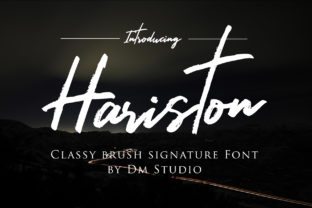
Hariston
A Handwritten Font with Quiet Confidence
Hariston isn’t loud. It doesn’t shout for attention or rely on exaggerated flourishes to make a point. Instead, it speaks with the warmth of ink on paper—slightly uneven, gently rhythmic, and unmistakably human. Hariston is a casual, light handwritten font designed with a smart feel: approachable yet intentional, relaxed but never careless. It bridges the gap between authenticity and polish—making it a compelling choice when you want personality without pretension.
What Makes Hariston Distinct?
At first glance, Hariston feels familiar—like notes passed in class or a friendly coffee-shop chalkboard. But look closer: its letterforms balance organic flow with subtle structure. The lowercase a, g, and y feature open, legible counters; the terminals taper naturally without sharp cuts; and spacing is generous enough to breathe, even at smaller sizes. Unlike many handwritten fonts that sacrifice readability for charm, Hariston maintains clarity across contexts—from a tiny caption on an Instagram story to a full-page brand manifesto.
Its “light” weight contributes significantly to its versatility. It avoids visual heaviness, making it ideal for pairing with bolder sans-serifs or elegant serifs. And while it’s undeniably casual, Hariston carries a quiet sophistication—thanks to consistent stroke contrast, thoughtful x-height proportions, and a rhythm that feels practiced rather than improvised.
Where Hariston Fits—and Where It Shines
Hariston thrives where warmth, trust, and approachability matter most. It’s not meant for legal disclaimers or technical manuals—but it excels in spaces where connection comes first.
Everyday Creative Projects
- Small business branding: A local bakery, indie bookstore, or handmade ceramics studio can use Hariston in logos, packaging tags, or window decals to signal care, craft, and community—not corporate distance.
- Digital content: Newsletter headers, blog post titles, or email subject lines gain instant friendliness with Hariston—softening tone without sacrificing professionalism.
- Printed collateral: Wedding invitations, event posters, or artisanal product labels benefit from its tactile, hand-crafted impression—even when printed digitally.
Professional & Digital Use Cases
Designers, marketers, and content creators often reach for Hariston when they need to humanize a message. For example:
- A mental health counselor uses Hariston in their website’s “About Me” section—reinforcing empathy and openness before a single word is read.
- An online course platform applies Hariston to module titles and instructor bios, helping learners feel guided—not lectured.
- A sustainable fashion brand pairs Hariston with a clean geometric sans-serif for product descriptions, balancing ethical sincerity with modern minimalism.
Who Benefits Most From Hariston?
Hariston resonates especially well with:
- Creators and solopreneurs who want their voice visually reflected—without hiring a custom lettering artist.
- Small businesses seeking affordable, on-brand typography that feels personal and memorable.
- Educators and coaches building nurturing, accessible learning environments—where tone matters as much as content.
- UX and web designers aiming to soften digital interfaces (e.g., error messages, onboarding steps) with humane microcopy.
It’s less suited for large-scale corporate identity systems requiring strict scalability across global markets—or for dense UI text where functional legibility outweighs expressive tone. That’s not a flaw—it’s intentionality. Hariston knows its role.
Strengths Worth Noting
Hariston’s greatest strengths lie in how it supports communication—not just decorates it:
- Emotional resonance: Its handwritten nature triggers subconscious associations with honesty, effort, and individuality.
- Adaptability: Works across print, web, and social media—with variable font support (where available) allowing subtle weight shifts for emphasis.
- Low barrier to entry: No design degree required. Anyone using Canva, Figma, or Google Docs can apply Hariston meaningfully—and see immediate impact.
- Cultural neutrality: Avoids regional stylistic clichés (e.g., overly “French” script or “American diner” retro), giving it quiet universality.
Realistic Considerations
Like any tool, Hariston performs best when matched thoughtfully to the task:
- Legibility at small sizes: While more readable than many script fonts, avoid using Hariston below 14px in body text—especially on low-resolution screens.
- Language support: Standard Hariston includes Latin-based languages (English, Spanish, French, German, etc.). Check your license if you need extended diacritics or non-Latin scripts.
- Licensing clarity: Free versions may be limited to personal use. Commercial projects—including client work or monetized content—require a proper license. Always verify terms before deploying.
- Pairing discipline: Its lightness means it needs contrast. Pair it with typefaces that offer structure—like Inter, Lora, or Poppins—not other delicate or decorative fonts.
How to Test Hariston for Your Project
Before committing, ask yourself three practical questions:
- What emotion do I want people to feel first? If “welcoming,” “thoughtful,” or “genuine” top the list—Hariston is likely aligned.
- Where will this appear most often? If it’s headlines, quotes, logos, or short-form digital text—yes. If it’s long paragraphs, data tables, or accessibility-critical interfaces—consider alternatives or reserve Hariston for accents only.
- Does it reflect how I want to be perceived—not just how I want to look? Hariston conveys presence, not perfection. If your brand values refinement over polish, precision over spontaneity, or authority over approachability, another font may serve you better.
A Final Thought: Typography as Tone
Fonts don’t just display words—they shape how those words land. Hariston reminds us that simplicity, when executed with care, carries weight. It’s not about handwriting being “better” than type—it’s about choosing the right voice for the moment. Whether you’re launching a passion project, redesigning a client’s landing page, or simply writing a heartfelt note to your team, Hariston offers a way to say things softly—and be heard clearly.
Try it in your next headline. Adjust the tracking slightly. Pair it with a grounded sans-serif. Notice how the mood shifts—not dramatically, but meaningfully. That’s the quiet power of Hariston: unassuming, intelligent, and wholly human.