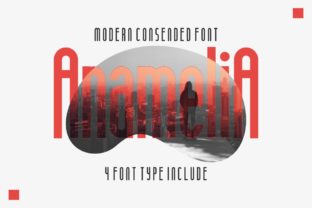
Anamelia Font Overview and Evaluation
Anamelia is a bold and classic sans serif typeface distinguished by its confident letterforms and subtle design idiosyncrasies. It avoids extreme geometric rigidity while maintaining strong visual presence—making it neither purely neutral nor overtly decorative. Its structure supports readability at larger sizes, and its proportions lend themselves to both editorial layouts and branding applications.
Why Designers Consider Anamelia
Designers often explore Anamelia when seeking a sans serif that balances authority with approachability. Its weight distribution and open apertures support legibility in digital interfaces, while its vertical stress and slightly tapered terminals add character without compromising clarity. It’s commonly evaluated for projects where typographic tone matters—such as brand identity systems, presentation decks, or marketing assets intended to convey confidence without austerity.
Unlike ultra-thin or highly condensed sans serifs, Anamelia maintains generous x-height and consistent stroke contrast. This makes it more versatile across mediums than fonts optimized solely for display or text use. Its design language sits between humanist and transitional sans serifs—closer to fonts like Montserrat or Raleway in spirit, but with distinct spacing and terminal treatments.
Practical Benefits
Anamelia performs well in contexts requiring immediate visual impact. Its bold weight renders effectively on screens, even at smaller sizes within navigation bars or mobile buttons. The font includes a full range of weights—typically from Light to Black—with matching italics, supporting typographic hierarchy without switching families.
Its licensing model is generally straightforward for web and desktop use, with options for self-hosted web font kits and standard desktop licenses. That simplifies integration into design workflows, especially for teams managing multiple platforms or needing consistent rendering across browsers.
For branding, Anamelia offers enough distinction to stand apart from overused system fonts (like Helvetica or Arial), yet remains legible and accessible. Its letterforms avoid eccentricity—so it doesn’t distract from content—and maintain neutrality where needed, such as in data dashboards or informational signage.
Tradeoffs and Limitations
Anamelia is not optimized for extended body text at small sizes. While readable in headlines and short paragraphs, its relatively tight default tracking and moderate contrast can reduce comfort in long-form reading—especially below 16px. Users evaluating it for editorial websites or e-books should test line height, letter spacing, and paragraph width carefully before committing.
It lacks extensive language support in some releases. While Latin-based scripts are well covered, extended Cyrillic, Greek, or Vietnamese glyphs may be limited or absent depending on the version. Projects targeting multilingual audiences should verify glyph coverage before selection.
Its bold character also means it can dominate layouts if paired with other strong visual elements. Designers sometimes find that Anamelia competes with expressive imagery or complex UI components unless balanced with ample whitespace and restrained color palettes.
Situations Where Anamelia Is a Strong Fit
Anamelia excels in branding for professional services—law firms, consultancies, financial institutions—where credibility and clarity are priorities. Its structure conveys stability without appearing dated, and its clean lines align with modern interface expectations.
It works effectively in presentation materials: slide titles, infographics, and report covers benefit from its strong silhouette and consistent rhythm. Because it scales predictably, designers can rely on it across print and screen outputs without major reformatting.
Marketing campaigns with concise messaging—such as event posters, email headers, or social media banners—also leverage Anamelia’s emphasis on immediacy. Its ability to hold attention at a glance supports quick comprehension, especially when paired with high-contrast backgrounds.
When Alternatives May Be More Appropriate
For long-form digital content—blogs, documentation sites, or academic publications—fonts with higher x-heights, looser default spacing, and more refined hinting (e.g., Inter, Source Sans Pro, or IBM Plex Sans) often provide better reading continuity. These alternatives prioritize functional legibility over stylistic distinction.
If minimalism or technical precision is central to the project’s identity, designers may prefer fonts with stricter geometry (e.g., IBM Plex Mono for code-heavy contexts or Neue Haas Grotesk for editorial rigor). Anamelia’s slight warmth and variation in stroke termination may feel inconsistent in environments demanding absolute uniformity.
Projects requiring variable font capabilities—such as dynamic weight adjustment based on viewport size or user preference—should confirm whether Anamelia offers a variable version. If not, alternatives like Roboto Flex or Red Hat Display offer broader interpolation ranges and responsive behavior out of the box.
Making an Informed Decision
Evaluating Anamelia begins with clarifying your primary use case. Ask: Is this for headings only, or does it need to carry body copy? Will it appear mostly on screen, or in mixed media? What languages must it support? Answering these helps determine whether its strengths align with actual requirements—or whether its limitations would require compensatory design effort.
Testing is essential. Render sample text in real contexts: a mobile navigation bar, a PDF report title, and a dark-mode dashboard header. Observe how it interacts with surrounding elements—not just in isolation. Check contrast ratios against accessibility standards (WCAG AA/AAA) at intended sizes, particularly for light or thin weights.
Consider workflow compatibility. Does your team use Figma, Adobe Fonts, or Google Fonts? Confirm availability and embedding options early. Some versions of Anamelia are distributed through boutique foundries, which may affect licensing cost or deployment flexibility compared to widely hosted alternatives.
Finally, weigh differentiation against familiarity. Anamelia stands out among common sans serifs—but not so much that it feels alienating. If your goal is subtle distinction rather than radical departure, it fits naturally. If you need either extreme neutrality or pronounced personality, other fonts may serve more directly.
Ultimately, Anamelia is a considered choice—not a default. Its value emerges most clearly when matched thoughtfully to specific communication goals, technical constraints, and aesthetic intentions.