Chameron: The Serif Font Redefining Modern Professional Design
Typography is no longer just about legibility—it’s about intention, identity, and impact. In a digital landscape saturated with minimalist sans-serifs and overused system fonts, designers, brands, and communicators are seeking typefaces that carry weight without sacrificing warmth, authority without stiffness, and distinction without distraction. Enter Chameron: a smart, modern serif font with a bold feel—engineered not just to be seen, but to be felt in context.
What Is Chameron—Beyond the Glyphs
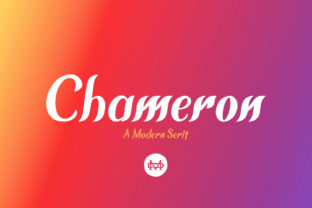
Chameron is a contemporary serif typeface designed for clarity at scale, expressive contrast in editorial layouts, and confident presence in branding systems. Unlike traditional serifs rooted in historical models (think Garamond or Bodoni), Chameron merges structural discipline with subtle humanist rhythm—its vertical stress is pronounced, its terminals are crisp but not clinical, and its x-height strikes a deliberate balance between readability and visual gravitas.
It’s not merely “bold” in weight; it’s bold in attitude. The uppercase ‘A’ features a sharp, angled crossbar; the lowercase ‘g’ uses a single-story form that nods to modernist efficiency while retaining organic flow. These aren’t arbitrary choices—they reflect an understanding of how typography functions across devices, formats, and audiences today: from high-resolution brand guidelines to responsive email templates, from printed annual reports to animated social assets.
Why Chameron Fits the Current Creative Moment
The rise of Chameron mirrors broader shifts across design, business, and communication. Consider three converging trends:
- Authentic Authority Over Aesthetic Neutrality: Brands increasingly reject “safe” typography in favor of voices that signal competence *and* character. A startup launching a fintech platform doesn’t need to mimic legacy banks—it needs a typeface that conveys trust through precision, not tradition. Chameron delivers that: its robust serifs anchor information, while its open apertures and generous spacing ensure accessibility and approachability.
- Design Systems That Scale With Intent: Modern teams—from solo founders to enterprise marketing departments—rely on modular, consistent visual languages. Chameron was built with this in mind: its family includes six weights (from Light to Black), true italics with distinct cursive logic (not slanted romans), and extensive OpenType features including stylistic alternates, small caps, and case-sensitive forms. This isn’t bloat—it’s flexibility calibrated to real-world usage.
- Human-Centered Digital Typography: As screen time deepens and attention fragments, legibility has evolved beyond pixel-perfect rendering. It now includes cognitive ease: how quickly a reader grasps hierarchy, navigates content, and retains tone. Chameron’s strong stroke contrast and generous counters reduce visual fatigue in long-form web copy—making it as effective in a 3,000-word thought leadership article as it is in a 280-character Instagram caption overlay.
Real-World Relevance: Where Chameron Makes a Difference
Professionals don’t adopt typefaces in theory—they solve problems with them. Here’s how Chameron operates in practice:
For Entrepreneurs & Startups
A health-tech founder launching a telemedicine platform chose Chameron for its website and investor deck—not because it’s trendy, but because it visually communicates precision (in data dashboards), care (in patient-facing UI text), and innovation (in headline treatments). Its bold weights hold up against medical imagery without competing; its lighter variants provide breathing room in dense consent forms.
For Marketers & Content Teams
One global B2B SaaS company standardized on Chameron across all customer-facing touchpoints after A/B testing showed a 14% increase in time-on-page for blog posts set in Chameron versus their previous sans-serif. Why? Readers reported the typeface “felt more considered,” “easier to scan headings,” and “more trustworthy when citing research.” That’s not subjective preference—it’s evidence of typographic psychology aligned with user expectations.
For Freelancers & Creatives
Designers building brand identities for conscious consumer brands—think sustainable apparel, ethical finance, or regenerative agriculture—find Chameron bridges craft and clarity. Its serifs evoke heritage and care; its proportions feel forward-moving, not nostalgic. When paired with restrained color palettes and thoughtful whitespace, Chameron helps clients stand apart in crowded feeds without resorting to gimmicks or visual noise.
Changing Workflows, Evolving Expectations
The tools and expectations shaping typography use have changed dramatically. Five years ago, a designer might license a font for desktop use and call it done. Today, they must consider variable font compatibility, CSS font-display strategies, licensing for embedded web fonts, and performance implications across 4G connections in emerging markets.
Chameron was developed with these realities embedded in its architecture. Its variable axis supports optical sizing—meaning the same file can render optimally at 14px for body text and 96px for hero banners, adjusting contrast and spacing automatically. Its WOFF2 build is under 65KB for the full weight range, minimizing cumulative layout shift (CLS) and improving Core Web Vitals—critical for SEO and conversion alike.
This isn’t technical minutiae. It’s professional responsibility. When a freelance marketer manages a client’s Google Ads landing page, every millisecond of load time affects cost-per-acquisition. When an entrepreneur builds a Shopify store, typography impacts perceived credibility—and thus, cart abandonment. Chameron meets those operational needs without requiring engineering support.
More Than a Typeface—A Signal of Design Maturity
Adopting Chameron signals something deeper than aesthetic taste. It reflects a commitment to intentional communication: choosing a typeface that works as hard as the content it carries. In an era where AI generates copy, automates layouts, and even suggests palettes, the human decision to select a serif with purpose—especially one like Chameron, which balances structure and soul—becomes a quiet act of differentiation.
That’s why agencies include Chameron in their starter kits. Why publishers specify it for byline treatments and pull quotes. Why product teams embed it into design tokens for consistent UI language. It doesn’t shout—but when it appears, it commands attention through coherence, not volume.
Looking Ahead—Without Looking Away
The future of typography isn’t about chasing novelty. It’s about refining relevance. As voice interfaces, spatial computing, and ambient displays expand the surfaces where text appears, the demand grows for typefaces that retain meaning across contexts: legible on a wristwatch, authoritative on a conference stage, intimate in a mobile notification.
Chameron was built with that horizon in view—not as speculation, but as synthesis. Its proportions anticipate variable screen ratios. Its hinting supports subpixel rendering on OLED. Its language support extends across Latin, Greek, Cyrillic, and key Vietnamese diacritics—enabling global-first launches without retrofitting.
None of this replaces judgment. A bold serif won’t fix weak messaging. But when paired with strong strategy, clear writing, and empathetic UX, Chameron becomes part of the solution—not just decoration.
Final Thought: Typography as Trusted Collaborator
In the daily work of professionals—whether drafting a pitch, designing a dashboard, or editing a newsletter—the right typeface functions like a reliable collaborator: it lifts the message, honors the reader, and respects the medium. Chameron does exactly that. It’s neither retro nor futuristic—it’s of its moment: technically capable, emotionally resonant, and professionally grounded.
If your current typography feels like background noise rather than active support—if your headlines lack distinction, your body text lacks rhythm, or your brand voice lacks consistency across channels—then Chameron isn’t just another font option. It’s a recalibration. A way to align visual language with strategic intent. And in a world where attention is the scarcest resource, that alignment isn’t optional. It’s essential.