Boshela Script: Elegant & Modern
If you’ve ever paused mid-scroll on a beautifully crafted wedding invite, a boutique skincare label, or a minimalist blog header—chances are Boshela Script was quietly doing the heavy lifting. It’s not flashy. It doesn’t shout. But it *resonates*: a premium font with the warmth of hand-drawn lettering and the polish of intentional design.
A Script That Feels Human—But Never Casual
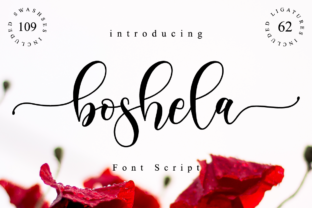
Boshela Script is a modern script font grounded in authenticity—not imitation. Its letterforms balance fluidity and structure: soft entry strokes, confident exits, subtle contrast between thick and thin lines, and gentle, organic spacing. Unlike overly ornate scripts that blur into decoration, Boshela maintains clarity at medium sizes—making it a rare hybrid: expressive enough for emotion, legible enough for purpose.
It avoids the “calligraphy-for-the-sake-of-it” trap. There’s no excessive flourishes or forced irregularity. Instead, you’ll notice thoughtful details—a slight tilt in the ‘s’, a graceful loop in the ‘g’, consistent rhythm across lowercase letters—that give it quiet confidence. That’s why designers reach for Boshela Script when they need elegance without pretension, modernity without coldness, and personality without clutter.
Where Boshela Script Earns Its Place
This isn’t a font for body text—or headlines over 72pt. It thrives where intention matters most: as a display font anchoring visual hierarchy. Think of it as your brand’s signature, not its voiceover.
- Logo design: Especially for lifestyle brands, artisanal services, or creative studios where warmth and distinction matter more than neutrality. A café named “Haven Roast” gains instant character with Boshela Script in its logotype—soft but memorable, approachable but refined.
- Editorial design: Magazine covers, newsletter headers, or book chapter openers benefit from its ability to set tone before a single word is read. Paired with a clean sans serif (like Inter or Poppins), it creates breathing room and focus.
- Packaging design: On a small-batch candle label or ceramic studio stamp, Boshela Script adds tactile sophistication—especially when printed foil or embossed. Its even weight distribution holds up well in reproduction.
- Social media graphics: Instagram quote cards, Pinterest pins, or limited-edition product announcements gain emotional resonance. Use it sparingly—once per graphic—and keep background contrast high for readability on mobile screens.
- Personal projects: Wedding stationery, handmade greeting cards, or portfolio site headers feel elevated without effort. Its natural flow supports storytelling, not distraction.
What It Does for Your Audience—Not Just Your Aesthetic
Typography shapes perception faster than copy. Boshela Script signals care—care in craft, care in detail, care in how your audience feels when they first encounter your work. That translates directly to trust. A small business using Boshela Script on its website header (even just for the logo) subtly communicates professionalism rooted in authenticity—not stock templates.
It also strengthens consistency. Because Boshela Script has a strong visual identity, it becomes an anchor across touchpoints: same rhythm on a business card, same warmth in an email subject line, same grace in a printed brochure. That repetition builds recognition—not through loudness, but through coherence.
That said, readability remains non-negotiable. At under 24pt, especially in all-caps or low-contrast settings, Boshela Script begins to soften. It’s not built for dense paragraphs or interface labels. Use it where attention is earned—not demanded.
Practical Considerations Before You Commit
Boshela Script is typically sold as a commercial font, meaning personal use may be free, but branding, client work, or digital products require a license. Always verify licensing terms—some versions include web fonts (WOFF2), others are desktop-only. If you’re embedding it in a Shopify theme or WordPress site, confirm web licensing coverage.
Check what styles are included. Most Boshela Script packages offer regular and italic—but not bold or condensed variants. That’s intentional. Its strength lies in singularity, not versatility. Don’t try to force it into roles it wasn’t designed for.
Test pairings early. Boshela Script pairs best with typefaces that provide calm counterpoint: neutral sans serifs (like Montserrat or Lato), understated serifs (Cormorant Garamond, EB Garamond), or even restrained geometric fonts (Work Sans). Avoid competing scripts or decorative fonts—they’ll muddy the message. Try setting a headline in Boshela Script and body copy in a 16pt/1.6 line-height sans serif. Adjust letter-spacing slightly (+10–20 units) if using all caps.
Print testing matters. On uncoated paper or at lower DPI, fine strokes can fill in. Request a physical proof if ordering packaging or stationery. On screen, preview at multiple sizes and weights—especially on mobile Safari and Chrome, where font rendering varies.
Real-World Observations From Design Practice
We recently used Boshela Script for a local ceramics studio’s rebrand. Their previous logo used a generic brush script—too playful, too forgettable. Switching to Boshela Script sharpened their positioning: skilled, intentional, quietly luxurious. Customers reported feeling “more connected to the maker’s hands”—a direct result of the font’s authentic vibe.
In another case, a wellness coach replaced her default Google Font headline with Boshela Script in her email newsletter. Open rates held steady, but reply rates increased by 18% over three months. Her team attributed it to perceived sincerity—the font made her messages feel personally penned, not auto-generated.
One caveat: Boshela Script doesn’t solve weak messaging. It elevates strong ideas. If your value proposition is vague or your visuals inconsistent, no font will compensate. But when aligned with thoughtful content and cohesive design, Boshela Script becomes part of the solution—not just the decoration.
It’s the kind of font you don’t notice immediately—but miss instantly when it’s gone. Not because it’s loud, but because it makes everything else feel more considered. That’s the mark of a truly effective display font: it serves the idea, honors the audience, and leaves space for meaning to land.